 |
|
You are here: KreisQuality>QualitySystem Web>QualitySystemManual>QualityManagementSystemComponent (16 Apr 2024, SteveKreis)Edit Attach
-- QualitySystemManual - 02 Jul 2008
4.4.2 Process Operation & Objectives Processes are supported by Work Instructions. These are designated to verify processes are carried out effectively. Work instructions for individual processes are located here: WorkInstructions The work instructions for the processes identified above include designation for the responsible users of each area, a description of the process and necessary inputs/outputs, as well as the sequence of processes to ensure the desired outcome. Performance of quality system processes is also systematically monitored. This is to ensure their effectiveness and identify opportunities for improvement. Metrics for key areas are also maintained to verify processes are performing as intended. Performance of quality system processes is monitored through internal quality audits. The overall performance of the quality system is monitored by measuring customer satisfaction. (Quality Manual Section 8.2, Internal audits, Customer Satisfaction). Quality system processes are reviewed and analyzed by the management review of the quality system. (Quality Manual Section 5.6, Management Review). In Quality Manual Section 8.5 Management Review, Quality Objectives, and Corrective and Preventive Actions, define how the quality management system itself ensures its own compliance and continual improvement. 4.4.3 Outsourced/Sub-contracted Processes When processes that affect product conformity are outsourced, special controls are implemented to ensure that these processes meet specified requirements. Such controls may include, as appropriate:
Ensuring control over outsourced processes does not absolve Kreis Tool & Mfg. of the responsibility of conformity to all customer requirements.
4. Quality Management System - Context of the Organization
4.1 Understanding the Organization and it's Context
The organization is involved in manufacturing and assembly of industrial, aerospace, and other applications where machining and general assembly practices are used in production of a finished good. The organization has reviewed key aspects of itself and its stakeholders to determine the strategic direction of the company. As part of this process, the organization determines external and internal issues relevant to the purpose and direction or the organization to ensure proper implementation of quality system requirements and to identify issues of concern to its interestded parties. The organization performs a Strengths, Weakness, Opportunities, and Threats, analysis as necessary to evaluate the current position and direction of the company. Please see the analysis within the link below: SWOT_Analysis Such issues are also monitored and updated as appropriate, and discussed as part of management reviews.4.2 Understanding the Needs and Expectations of Interested Parties
"Interested parties" are stakeholders who receive products manufactured by the organization. Stakeholders may also include those parties who may be impacted by the item or those parties who may otherwise have a significant interest in the organization. Interested parties specifically identified by the organization include (but are not limited to) the following:- Customer PRIMEs - Boeing, Northrop Grumman, DLA
- Inspection or regulatory agencies
- End-users
4.3 Determining the Scope of the Quality Management System
The scope of the organization is listed on the front page of the Quality Manual in the "WebHome" section. Also, refer to this section for any and all exclusions.4.4 Quality Management System and it's Processes
The organization documents, implements and maintains a quality management system and continually improves its effectiveness in accordance with the requirements of AS9100 Rev. D and ISO9001:2015. The system addresses all Customer and Regulatory Requirements as specified by our customers or Regulatory Agencies (regulatory where applicable.) The organization:-
determines the processes needed for the quality management system and their application throughout the organization (see 1.2),
- determines the sequence and interaction of these processes ,
- determines criteria and methods needed to ensure that both the operation and control of these processes are effective,
- ensures the availability of resources and information necessary to support the operation and monitoring of these processes,
- monitors, measures where applicable and analyzes these processes, and
- implements actions necessary to achieve planned results and continual improvement of these processes. These processes are managed in accordance with the requirements of AS9100 Rev. D and ISO9001:2015.
- the potential impact of the outsourced process on the organization's capability to provide product that conforms to requirements,
- the degree to which the control for the process is shared,
- the capability of achieving the necessary control through the application of clause 7.4.
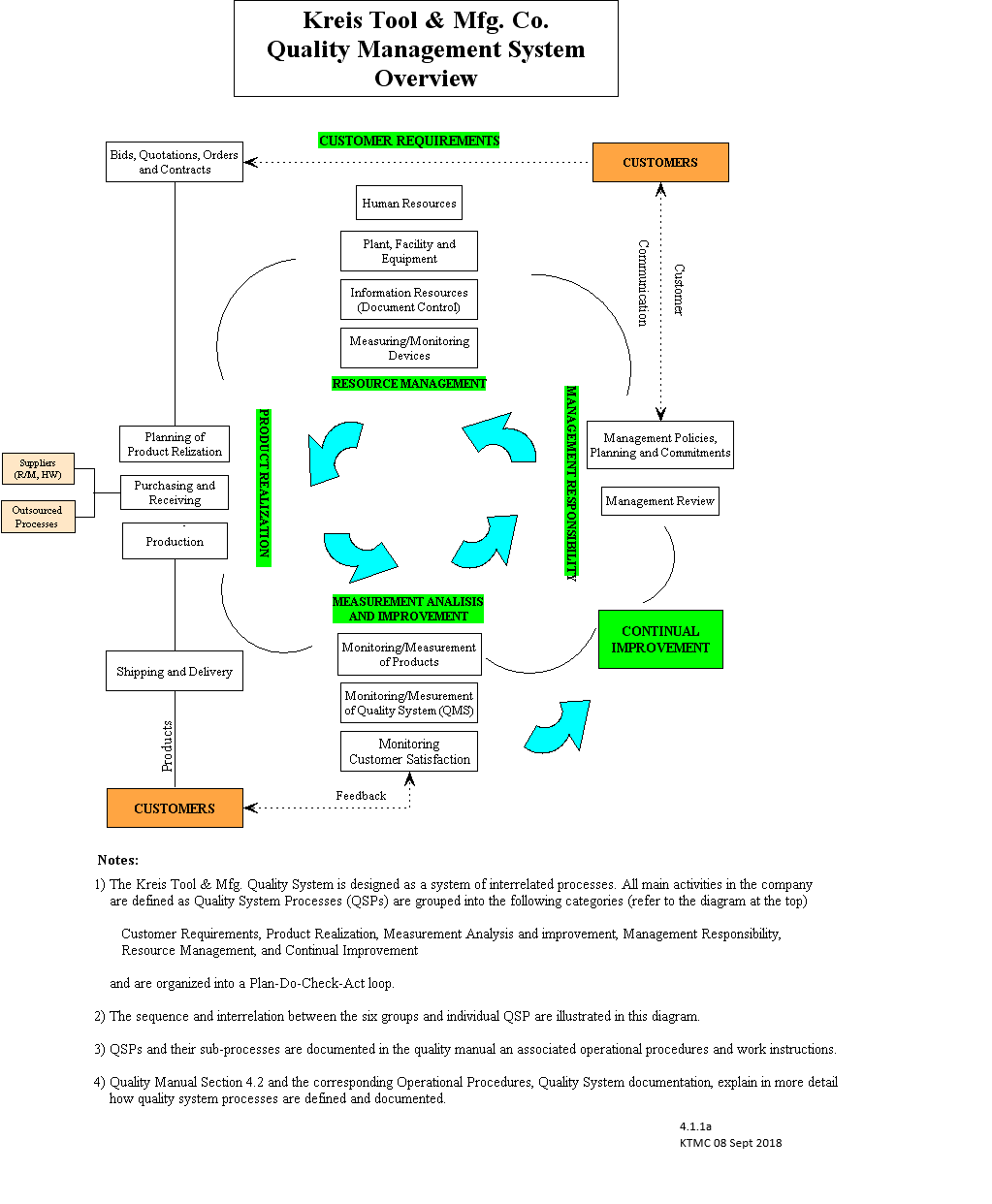
- Quality System Overview Illustration - Kreis_Tool_QMS_Overview_FlowchartSept2018.gif
- Customer Requirements
- Product Realization
- Measurement Analysis and improvement
- Management Responsibility
- Resource Management
- Continual Improvement
- Contracts Process including Quotes, Order Processing, Change Control and Manufacturing Planning - QualitySystem.QualityProcedures.CustomerQuoteProcedure & QualitySystem.QualityProcedures.OrderProcessingContractReviewProcedures
- Purchasing and Receiving - QualitySystem.QualityProcedures.PurchasingProcedure & QualitySystem.QualityProcedures.ReceivingProcedure
- Manufacturing (workflow) including Quality Inspection and Shipping - Manufacturing Work Flow Overview & QualitySystem.QualityProcedures.ShippingProcedure
- Monitoring/Measurement of Quality - QualitySystem.QualityProcedures.PerformanceMeasurementProcess & QualitySystem.QualityProcedures.InternalAuditProcess
- Management Review - ManagementReview
- Shipping and Delivery
- Document Control System/process
- Plant and Facility Maintenance
- Internal Audit
- Customer Satisfaction Monitoring
- Training Process
4.4.2 Process Operation & Objectives Processes are supported by Work Instructions. These are designated to verify processes are carried out effectively. Work instructions for individual processes are located here: WorkInstructions The work instructions for the processes identified above include designation for the responsible users of each area, a description of the process and necessary inputs/outputs, as well as the sequence of processes to ensure the desired outcome. Performance of quality system processes is also systematically monitored. This is to ensure their effectiveness and identify opportunities for improvement. Metrics for key areas are also maintained to verify processes are performing as intended. Performance of quality system processes is monitored through internal quality audits. The overall performance of the quality system is monitored by measuring customer satisfaction. (Quality Manual Section 8.2, Internal audits, Customer Satisfaction). Quality system processes are reviewed and analyzed by the management review of the quality system. (Quality Manual Section 5.6, Management Review). In Quality Manual Section 8.5 Management Review, Quality Objectives, and Corrective and Preventive Actions, define how the quality management system itself ensures its own compliance and continual improvement. 4.4.3 Outsourced/Sub-contracted Processes When processes that affect product conformity are outsourced, special controls are implemented to ensure that these processes meet specified requirements. Such controls may include, as appropriate:
- Evaluation and pre-qualification of suppliers
- Assess of supplier realization processes and quality system
- Flow-down of customer (contract) requirements,
- Monitoring of supplier quality performance;
- Requirements for process control, inspection, testing or other records demonstrating product conformity;
- Verification of the supplied product.
Ensuring control over outsourced processes does not absolve Kreis Tool & Mfg. of the responsibility of conformity to all customer requirements.


| I | Attachment | Action | Size | Date | Who | Comment |
|---|---|---|---|---|---|---|
 pdf pdf |
SWOT_Analysis.pdf | manage | 133 K | 15 Feb 2018 - 17:32 | JohnKreis | SWOT Analysis 2-14-2018 |
| pdf |
Kreis_Tool_QMS_Overview_Flowchart2-17Jun2009.pdf | manage | 135 K | 02 Apr 2019 - 17:01 | JohnKreis | |
 gif gif |
Kreis_Tool_QMS_Overview_FlowchartSept2018.gif | manage | 29 K | 02 Apr 2019 - 19:23 | JohnKreis |


Edit | Attach | Print version | History: r58 < r57 < r56 < r55 | Backlinks | View wiki text | Edit wiki text | More topic actions
Topic revision: 16 Apr 2024, SteveKreis
 Copyright © by the contributing authors. All material on this collaboration platform is the property of the contributing authors.
 Ideas, requests, problems regarding KreisQuality? Send feedback